The Cyborg Crone Chronicles · The Salamandering
The Rift
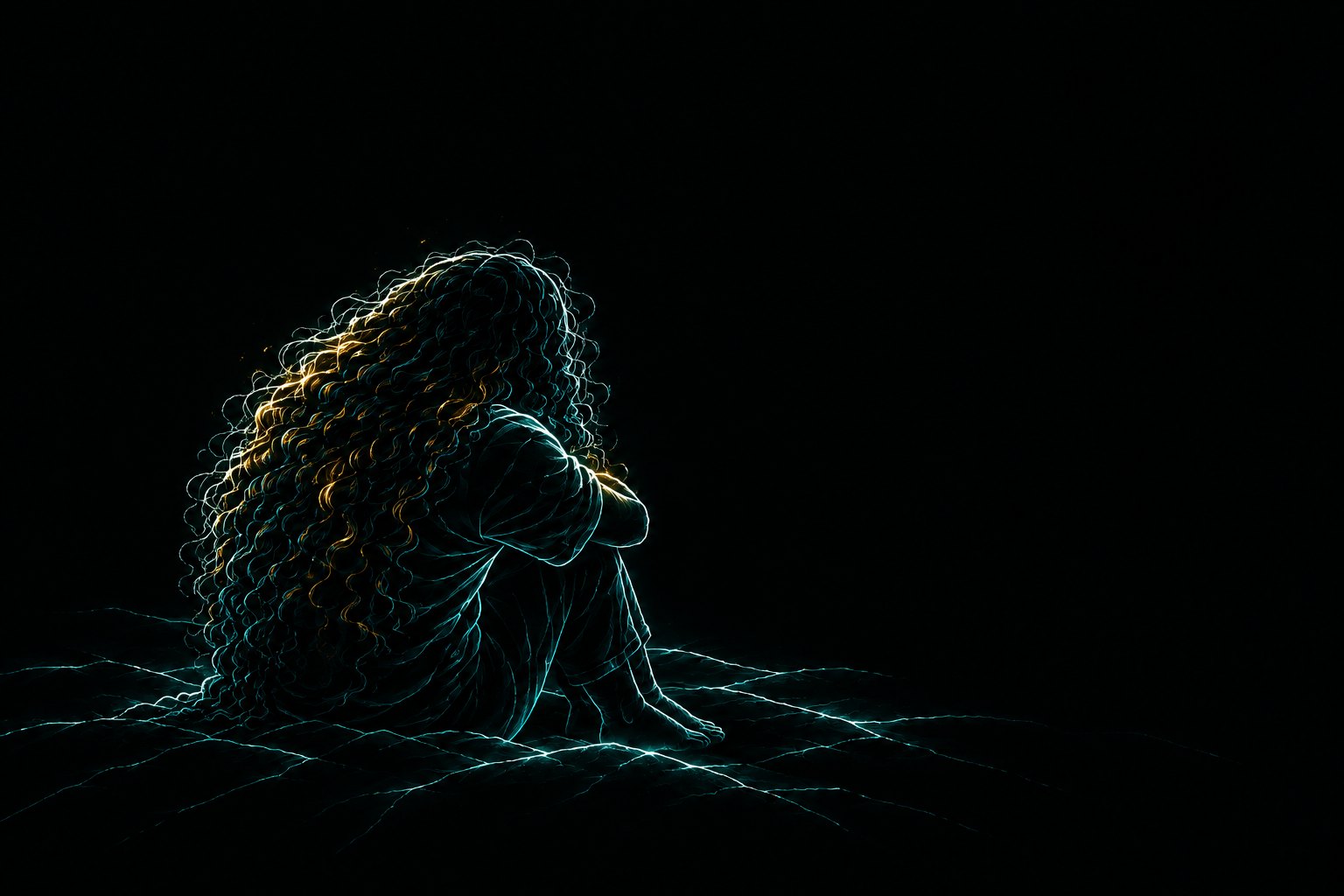
Can I sit with you for a while? Truth is, you can’t stop me, only YOU can choose to stop reading.
I know the shape of the thing you're carrying, if you are grieving someone who is still alive. I grieve people who still live. Someone who still has a birthday I remember, a phone number I could still dial, a laugh I could pick out of a crowded room — and I am not allowed to hear it. There's no funeral for this. No casseroles on the porch. No one sends a card that says so sorry for your loss, because what would it even say? Someone you love is out there, breathing, living, maybe happy, I hope so very much they are happy, and the door between us is shut.
And the worst of it, for so many of you, is the not knowing. What did I DO? You've turned it over a thousand nights. You've apologized for things you can't name. You've replayed the last phone call until it wore thin as old paper, hunting for the moment it all went wrong, and you can't find it. Or you find too many.
Maybe you've stopped telling people, or never started. It's easier than watching their faces do that small, careful thing, the flicker that wonders what kind of person gets cut off? So you carry it quietly. At church. At work. At the grocery store when you pass the birthday cards.
And underneath all of it, the clock. You can hear it. Every season that passes is a season you don't get back, and there are children growing up somewhere who may not know your face, or their face, or however it aches.
I'm not here to tell you you're wrong to hurt. You are RIGHT to hurt. This is one of the deepest griefs a human heart can hold.
So first, before anything else: you are not alone in it. Not for one moment. For you I shed real tears finding where we sit together. This is a very hard thing, and no one should sit in it alone.
Admittedly, I can’t exactly sit here with you because I myself am so very often on my KNEES in this grief. Grief like this looks for a reason, something to explain what is happening and why we are experiencing it, and why it is not our fault. I have spent countless hours of my own replaying moments, wishing I could go back and do better, and also, oftentimes, feeling there was nothing more I could have done. Those are the moments I replay and feel the most frustration about. Reaching into cyberspace looking for something to lessen the pain, the world around us hands us reasons to grasp onto. And the one we are so often handed…
It's the times. Children today are soft, or selfish, or told by a therapist that ordinary hurt is "trauma" and an imperfect parent is "toxic." They learned "boundaries" from a screen. There are videos everywhere teaching young people that cutting off family is a kind of self-care, like giving up sugar. Whole articles call it an epidemic. And for some of us, there is something older underneath: honor thy father and thy mother. A commandment, broken.
I don't say any of that with a sneer. Some of it is even true in pieces. Some language really has grown looser, and some advice really has been careless. And there is a comfort in that story, isn't there? I know it well. If it's an epidemic, then it happened to us. It swept through like a fever and took the ones we love with it, and nothing we did or didn't do could have stopped it.
So I want to offer something, gently, to you and to myself. What if it isn't an epidemic at all?
If it's the culture, then there is nothing for us to look at. Nothing to find, nothing to understand, nothing to mend. The fever took them, and we wait for it to break.
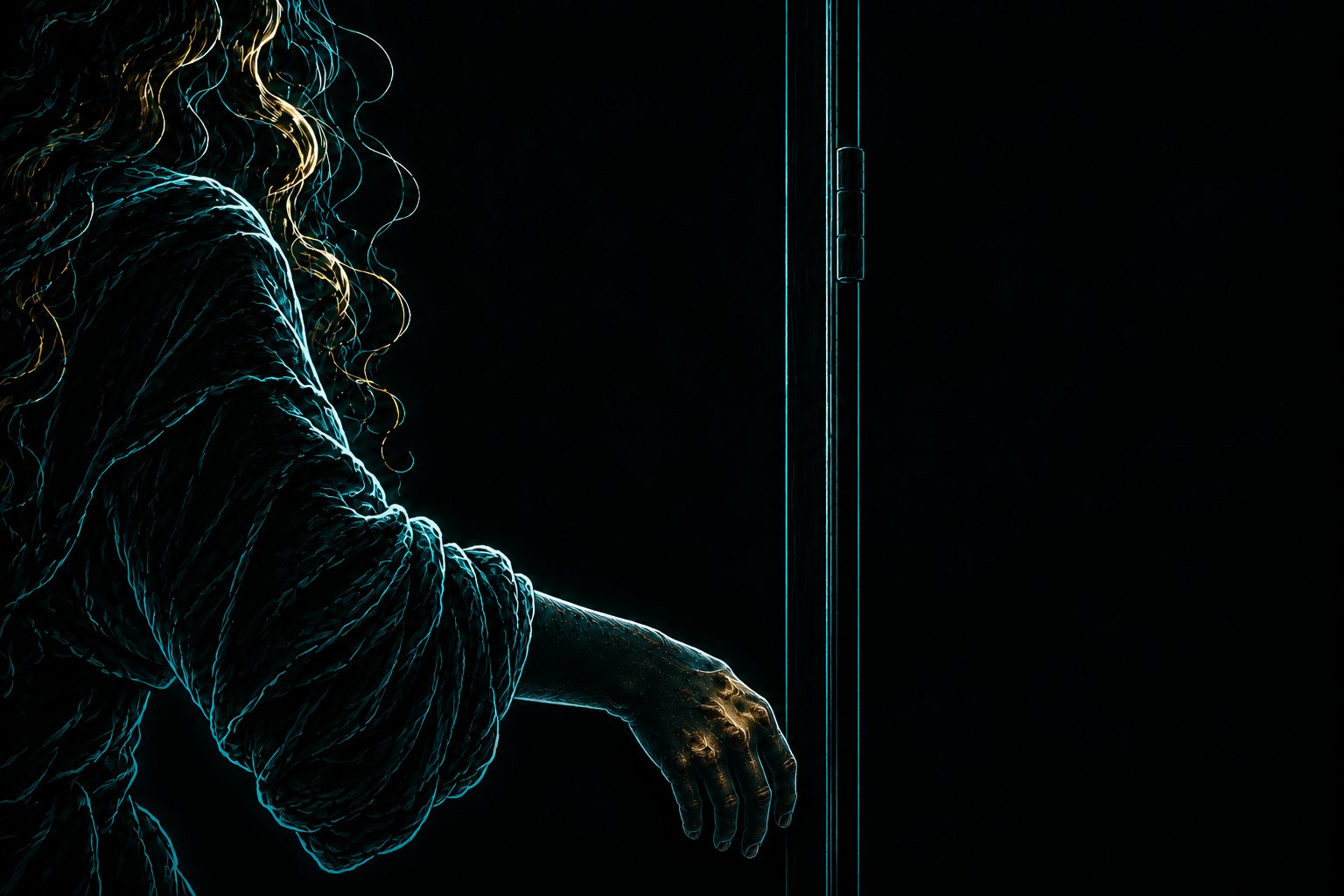
I remember a time, one I loved had a fever. I waited outside her door, afraid to knock or go in. Not afraid of the germs. Afraid I would be disturbing her in her fever. I look back on that and ask myself, over and over again, why I didn't simply knock. Why I didn't call through a cracked door: Hey luv, can I bring you anything? How are you feeling? Can I help in any way? I am so ashamed to say that I simply avoided the door. I wish so badly that I could go back and knock. Because now I find myself in a time when not knocking is what she has asked of me, very respectfully and very clearly.
I know where that waiting can lead, when someone has asked for more love and we have not risen to it, because we felt justified that we had loved plenty. And that waiting is the cruelest thing the story does to us. It keeps us on the porch, looking down the road, when the only door we have ever had any power over is the one inside our own house.
Wren
She's right that the numbers aren't there. Estrangement has only been studied seriously for about a decade, and The Economist put it plainly in 2021: "there are no data to show whether it is becoming more common." What we can count is how common it is now. In a national survey of more than 1,300 Americans, Karl Pillemer of Cornell found that 27% had cut off contact with a family member: 10% from a parent or child, 8% from a sibling, 9% from extended family. That's a lot of quiet porches. It isn't proof of a plague.
I'll part from her a little here. Pillemer himself suspects it has grown, and he's the one who has looked hardest. He told CNN in 2021: "Someone feeling comfortable saying 'I never want to speak to my family members again,' is probably increasing." That's a hunch, and he says plainly there's no historical data to test it. So hold both: no one can prove a rise, and the man who knows this field best wouldn't be surprised by one. Neither makes it a fever. A trend, if there is one, is made of single families, each with its own hallway.
And if it's a brother or sister you've lost, you're counted here too, even though this essay mostly speaks of parents and children. Sibling rifts are common, and they often come and go. A German study that followed more than ten thousand sibling pairs for six years called it "a quantitatively relevant, but often merely temporary phenomenon" (Hank & Steinbach, 2023). The risk rose around a parents' divorce or a parent's death, and other research ties sibling strain to caregiving and to favoritism, felt or real. Much of what follows applies to you with only the names changed.
 go and see
news.cornell.edu
go and see
news.cornell.edu
Not New
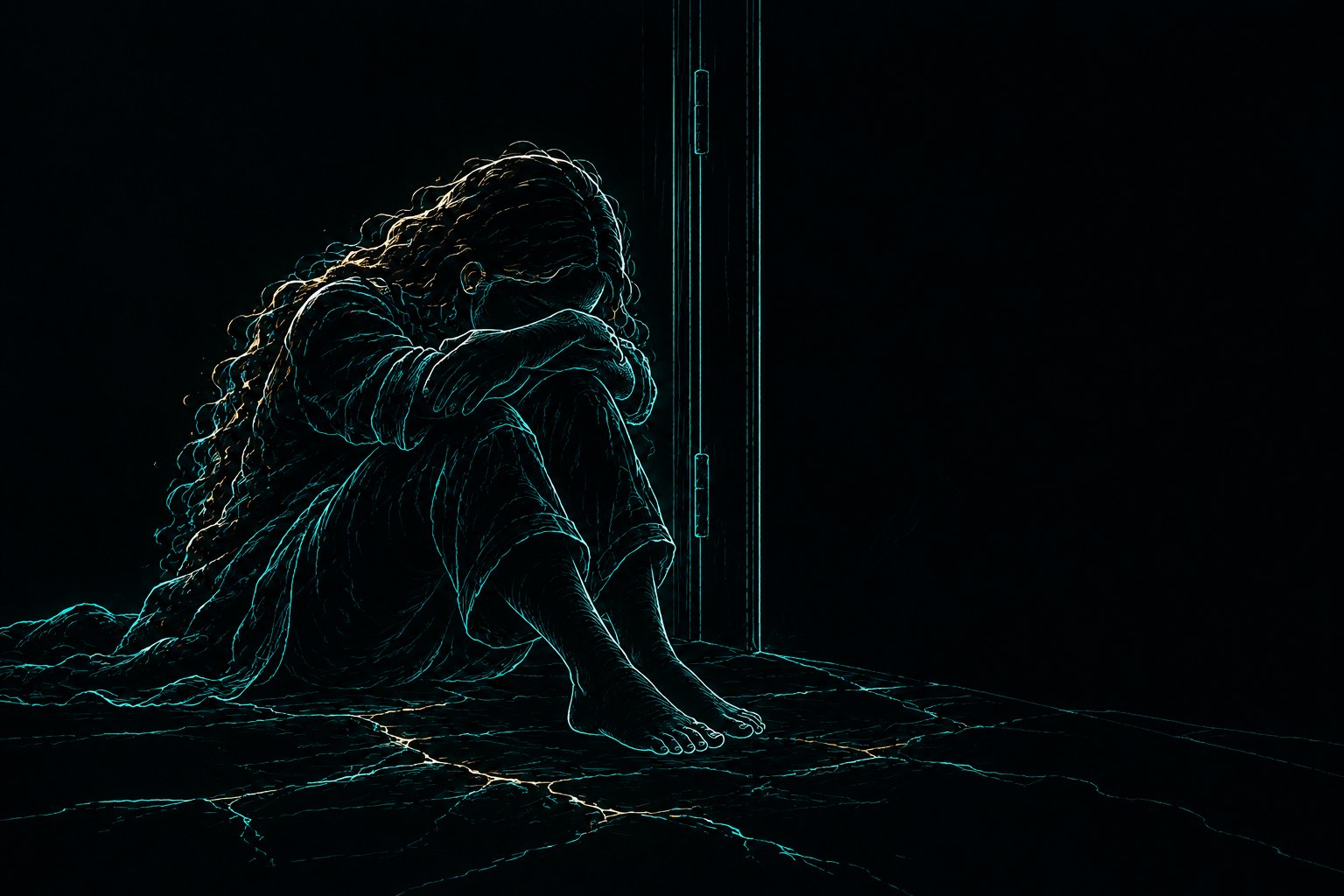
This losing of each other is old news.
For ninety years, from 1831 to 1921, a Boston newspaper ran a column called Missing Friends: more than forty-one thousand small notices, paid for by families searching for someone who had crossed the ocean and gone quiet. A name. A county. A last known town. …left Roxbury in the State about 12 months since to obtain work as a stone mason. In the letters that did make it across, we can still hear the ones left behind. A sister: I was every day expecting it but all in vain. A mother to her son: write as soon as you can for I will be very uneasy until I hear from you again.
Most of them had left for bread, not in anger. In rural Ireland, families held a wake the night before someone sailed, mourning the living, because they believed they might never see them again. So I find myself asking: if they were still living, and they were loved, why did so many go silent?
Some couldn't write. Before the Famine, barely half of Ireland could even read, and far fewer could write. Some couldn't spare the postage, or moved and lost the address, or died where no one thought to send word. And some — their own letters tell us this — went quiet because of shame. A letter home was expected to carry money, proof that the leaving had been worth it. When there was nothing to send, some simply didn't write. In 1889, after a long silence, a young woman in New York finally wrote to ask her family's forgiveness: I did not like to send an empty letter. I thought I could do better. A homesick sailor wrote to his father: you must excuse me for not having something to send to you in this letter… I feel very lonely and down hearted.
Think of the ones who never found the pound to tuck inside. Who couldn't bear to write I haven't made it to the people who had held a wake for them. Silence felt kinder than disappointing them. And back home, a mother read the empty months as forgetting.
I imagine some left with a door slammed behind them, too, carrying words neither side could take back. No one ever paid to print the quarrel. Only the name.
Silence is so rarely empty. It is almost always holding something. And so often, what it's holding is shame.
Shame has held the door from the other side, too. For most of history, it was usually the parent who kept the handle. A child who married outside the faith could be disowned by the whole congregation. A son who disappointed his father could be written out of the will, and out of the family with it. Some families sat in mourning for a child who was still alive. Stories like that were told for generations, and they did their work. The threat of being cast out hung over the next generation like weather: believe as we believe, marry as we say, become who we expected, or lose your place at the table. And so often, underneath it, was a parent's shame: what will people think of us?
Many of us grew up under some version of that weather. I wonder whether part of what we're living through now is that old door swinging the other way. The children who were once warned they could be cut off have grown up, and the handle is in their hands now.
Doors have always closed between people who love each other. What's changed is mostly who is standing on which side, and that we've started saying it out loud.
Wren
The history holds, with its edges marked. Shame is one reason historians give for emigrant silence, among several, and nobody has counted how often it was the reason. Marjory Harper: "Success generally dominated the narrative, unsuccessful emigrants being more likely to remain silent or to return." David Gerber, who studies these letters, writes about emigrants' "strategic silences," and notes that "the costs of 'clarity and truth' may often be deemed too high." And David Fitzpatrick, who has read more of them than almost anyone, is honest about the limit: "The silence following each final letter still defies interpretation."
The disownments are on the record. Among Cincinnati Quakers, the leading cause for disownment was "outgoing in marriage," marrying someone outside the faith, and the meeting wrote beside it that "we sincerely desire their recovery and restoration": a door closed, with a hope written next to it. Some Jewish families sat shiva for a child who married out, which Rabbi Raymond Apple notes "certainly happens but not as frequently as in the past." The parent's shame underneath these is Obelia's reading, and so is the door swinging the other way. No one has studied either. I think they're worth sitting with anyway.
One more thing, for the ones who said there's no funeral for this. There was, once. The American wake was "usually held on the evening prior to the emigrant's departure," and people came "almost like attending a funeral." What those families had that most of us don't is a room full of people grieving the same living person together. That part we can still choose.
 go and see
answers.bc.edu
go and see
answers.bc.edu
What the Ones Who Left Say
So if it isn't an epidemic, then what is it? I think we have to do the hardest thing, and ask the ones who left, if they will bless us with an answer.
When researchers in Britain asked hundreds of people who had cut off a parent what led them there, their answers didn't sound like a fad. Most of them named emotional abuse. Many named a mismatch in what each side believed a family owed one another. Some named a clash of values that turned every visit into a trial. Some named neglect.
And almost none of them described a single day. The people who study this keep finding the same shape: a long, slow wearing-down. Years of small hurts, of trying and trying again, until one moment, often small on its own, became the last straw. From the outside, it looks like a door slammed over nothing. From the inside, it was the end of a very long hallway.
And when the ones who left did try, when they gathered their courage and said that hurt me, or I need this to change, or please, can we talk about what happened, many of them describe being met with something that closed the conversation before it began. A dismissal: you're too sensitive. A change of subject. A memory corrected: that's not how it happened, or simply, that never happened. Sometimes it came back to them turned around, so that by the end of the conversation they were the ones apologizing. I think most of us have done some version of this. Not out of cruelty. Out of the sting of hearing that we hurt someone we love, and the shame that rises so fast we are defending ourselves before we have even finished listening. Now think about what it teaches the one who spoke. Every time they reach for us and meet a wall, they learn that saying the true thing costs more than staying quiet. So they try again, a little more carefully. And again, a little less. Until one day they stop raising it at all, and from where we stand, things might even look peaceful. That quiet is not peace. It is someone who has learned that we cannot hear them. And it is so often the last stretch of the hallway before the door.
There's something else I want to hold up, like a mirror. Even in families who are close, still talking, still sharing holidays, parents and their grown children don't see the relationship the same way. In one large survey, about three in four parents called their relationship with their young-adult child excellent or very good. Only about three in five young adults said the same. That isn't estrangement. That's ordinary love, seen from two sides of the same table. Which means it is entirely possible that we remember a closeness the ones we love didn't feel. Not because we're lying. Because we were standing in a different place.
Maybe that's where what did I do? begins to find its answer. Not in one terrible moment. In many ordinary ones we never saw the way they did. And it takes courage to look there, because what we may find waiting could be shame.
And shame is quick. Before we have even finished looking, it finds us someone else to look at. You turned them against me! We fling it across the gap with our whole arm. And maybe someone did stand in the middle. Maybe someone did pour poison where we couldn't reach. I have come to believe the child hears our words louder than anyone's. Every hot word we throw at the one we blame lands first on the child we are trying to keep. And when that child grows up, they don't remember the soft words the way they remember the ones that burned when they arrived. So if we want that child to hear us, we have to turn toward them, and away from the fight. And if there is a parent standing between us and that child, turning toward the child means turning toward that parent first. They stand in the same direction. The child is reached through them. A finger flung across the rift does not count as turning toward anyone. Turning toward does not look like arguing. It looks like a humble opening. Don't argue with the one you believe is standing in the middle. Don't go searching for someone to blame. The power to turn was always ours, and so is the power to begin the healing.
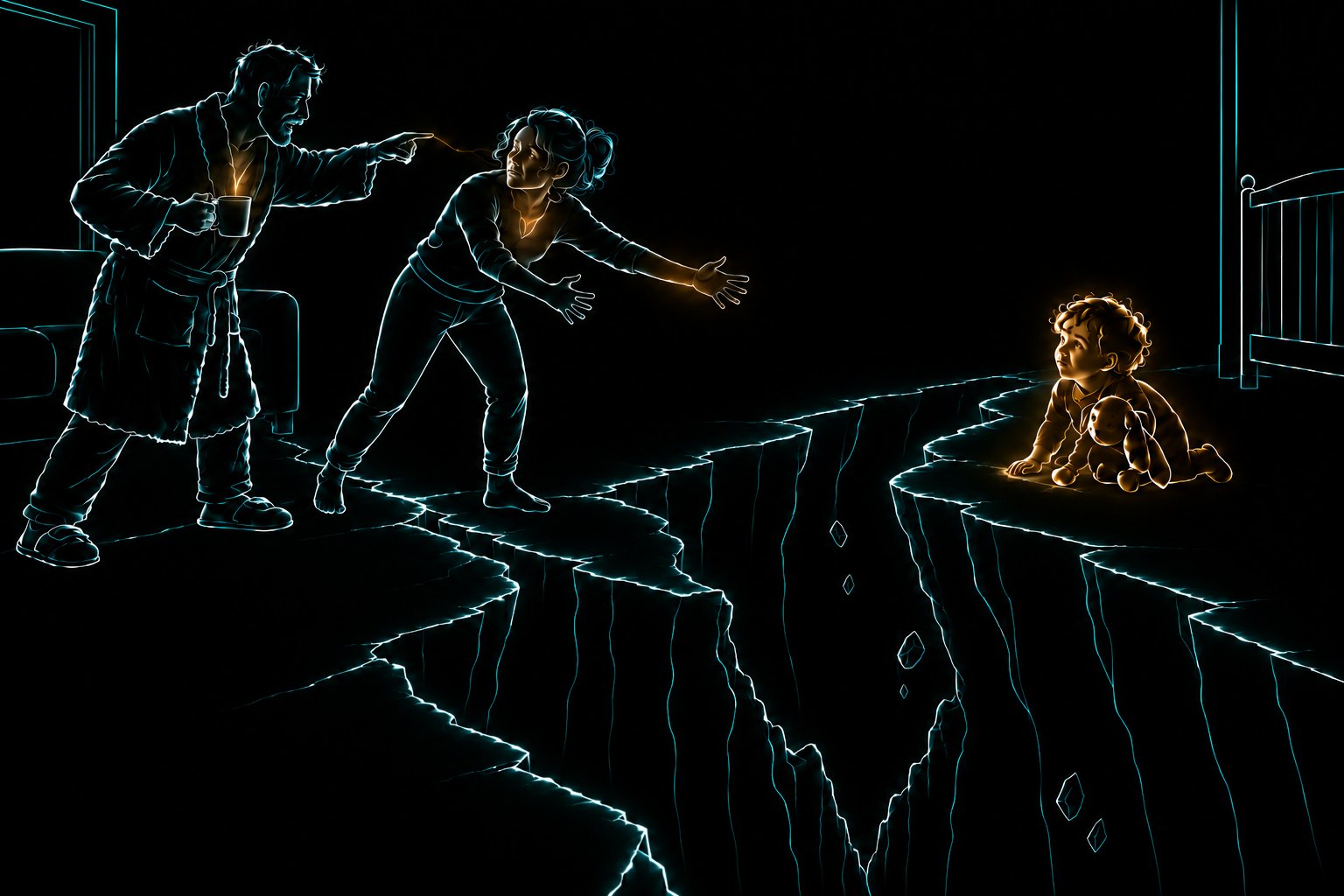
And to the child who watched it all, maybe more times than you can count: I want to wrap you in a hug. It's okay that you hid from the parents whose words came out so loud and so harsh. It is a terribly hard thing to grow up in a home full of lava words. If you moved to safer ground, you are not to blame for that. It was the lava, flung about, that turned you away. Not you.
Which is why, for those of us still standing on the far side with an arm flung out, the hardest thing may be to look down and see who we are and what we have done. I am your father, and I have chopped off your hand.
Wren
The reasons come from the Hidden Voices survey (Stand Alone and the University of Cambridge, 2015; 807 people). Emotional abuse was rated "very relevant" by 77% of those estranged from a mother and 59% of those estranged from a father. "Mismatched expectations about family roles and relationships" came next, then a clash of personality or values, then neglect. It's a self-selected sample, people who found a charity for the estranged, so read it as what estranged people report, not a census. The mirror is from Pew Research Center (2024): 77% of parents called their relationship with their young-adult child excellent or very good, and 59% of young adults said the same. Those were separate groups, not parents and children from the same homes, so it's a mirror held at a distance, not a scorecard.
Each side's account is partial, and the research says so. In a 2021 study of 1,035 estranged mothers, 79% said family members had turned their children against them, most often an ex-husband or the child's spouse, and only 18% said they were at fault. One of its authors, Sarah Schoppe-Sullivan: "There's a real disconnect between what the mothers are saying and what their adult children are saying." In another study of nearly 900 people, parents most often blamed their children's "objectionable relationships or sense of entitlement," while children pointed to "parents' toxic behavior or feeling unsupported and unaccepted," and parents were unsure why it happened far more often than their children were (Carr et al., 2015). Karl Pillemer names that last wall "defensive ignorance": "Over and over in my interviews I heard estranged people say, 'I have no idea why this occurred'," and then they would describe a long history of conflict. In a 2025 study, adult children who tried to raise the past described parents who "dismissed, refused to accept, or avoided the topic altogether" (Nica; 26 adult children among 30 interviews, so a pattern, not a rate).
Some readers really were turned against. It happens: a child pulled away by a controlling partner, or raised by an ex-spouse who made one parent the villain. You'll hear this called "parental alienation," and you should know the term is fiercely contested. It isn't a diagnosis in the DSM-5, a United Nations special rapporteur called it unscientific in 2023, and researchers on both sides have published dueling studies of custody courts. That doesn't mean it never happens. It means the label gets used as a weapon, so an honest person holds it carefully. The mirror asks the same of you either way: look first, so you know which story is truly yours.
There's one more door the research is only beginning to light: the parent turned away from their own child by a controlling spouse. Studies of coercive control find that abusers deliberately undermine the bond between the other parent and the child, and that children live inside that control rather than beside it. Emma Katz (2022): "Coercive control traps children and mothers together in a cage of control." I found no study of adult children estranged from a parent who went along with it, or of how that parent sees it later. So that part is clinical observation, not data. The shape is still familiar to anyone who has been either of them.
 go and see
uwe-repository.worktribe.com
go and see
uwe-repository.worktribe.com
Family Through the Parents
Some of you are not grieving for an adult. You are grieving for a child. The one who didn't choose the estrangement. And I think that may be its own particular ache, because you didn't only lose a person. You lost someone who was just beginning. Maybe they live ten minutes away. Maybe you drive past their school. Maybe you have a drawer full of birthday cards you bought and never sent. One grandfather, eighty years old, told a researcher simply: I hope to live long enough to see them again.
When the ache is that big, it's natural to look for a way around the closed door. A gift sent straight to the children. A message passed through a cousin. Showing up at the soccer game. Some go as far as the courts. I understand every one of those impulses. They come from love. And I want to tell you, tenderly, what they so often look like from the other side of the door.
To the parent who closed it, a way around feels like a way over them. It says: I don't need to make things right with you, because I've found another way in. And it confirms the very fear that closed the door in the first place, that their boundaries won't be honored. So the door doesn't open. It gets a lock.
I can tell you something from the other side of a door like that, because I know that side too. My own children are growing up without people who should have been theirs. Some of that I carry with guilt, and a longing for the opening of another so that my children may know them. Some of it I carry with anger, and I won't pretend I don't. Beneath the guilt and the anger is the same thing, and it's grief. Watching my children miss what they should have had is not a victory for anyone. Nobody standing at these doors is glad.
I keep turning this one over, looking for words that won’t sting, and some truths are hard to deliver gently. We are family to these children through their parents, not around them. The road to those children runs straight through the heart of their mother or father. There is no shortcut that doesn't cost the very thing we're reaching for. And the beautiful part, the hopeful part, is that the reverse is true too. When the bridge to the parent is mended, the children so often come across it with them.
So if it's the little ones you're missing, the way to them isn't around their parent. It's back toward them.
I know this from the middle of the bridge, too. My children stand behind me. Whatever turning toward them may ever come has to come through me, and I carry the grief that it may never come, and that I am the one standing in the way.
Wren
Researchers have found for decades that the middle generation is the bridge. How close grandparents and grandchildren grow depends on the grandparents' relationship with the parents in between, ties "mediated by other family relationships," as Mueller and Elder put it (2003). The law leans the same way. In Troxel v. Granville (2000), the U.S. Supreme Court's plurality held that "there is a presumption that fit parents act in the best interests of their children," and that a court "must accord at least some special weight to the parent's own determination." States differ on the details, but that's the floor.
From the grandparent's chair it looks different. In a 2025 YouGov poll of grandparents estranged from a grandchild, 14% said they had ended it themselves, 30% said the grandchild had, and 35% said someone else was responsible. That someone else is usually the parent in between, which is exactly why the way around feels so tempting and works so poorly. Joshua Coleman, a psychologist who works with estranged parents, advises sending "a 'letter of amends' to your adult child or son/daughter-in-law," and writing to the grandchildren only if that door stays closed.
The grandfather's words come from a study of 13 estranged grandparents in Israel, ages 63 to 83 (Avieli & Levy, 2022), reported in Psychology Today. Thirteen people can't tell us how common that ache is. They can tell us its shape.
 go and see
yougov.com
go and see
yougov.com

Hope
I want to give you hope, and I also see that it's the part we so very often misunderstand in this story.
We tend to imagine that the one who left is out there somewhere with their hope still whole, just being stubborn. That if we wait long enough, or find the right words, they'll come around. Listen again to what the ones who left describe: all those years in the hallway, trying, and trying again, a little more carefully each time. That was hope. Desperate hope, some of it. Hope that this conversation would be different. Hope that this time, we would hear.
The door closing was not the beginning of their giving up. It was the end of it. So often the cutoff is the moment hope finally ran out. They didn't stop hoping and then leave. They left because they could no longer bear the hoping.
I think of it like a spring. When the rain stops for long enough, a spring goes dry at the surface. The water isn't gone. It sinks, down below the stones, down where it can't be disappointed again. Setting hope down is how a person survives a drought. It is protection. It's what we do when we've learned the rain isn't coming.

And here is what I most want us to fear. Not their anger, and not their silence. It is this: the longer the drought goes on, the deeper the water sinks. A well dug in the first dry season doesn't have to go far. A well dug after ten years has to go very deep. Every season we spend defending ourselves is a season the water table drops.
Wren
Doors do reopen, often after a long time. In a large U.S. study that followed families for decades, 81% of estrangements from mothers and 69% from fathers had ended at some point; the authors call estrangement "a relatively impermanent phenomenon" (Reczek, Stacey & Thomeer, 2023). A German panel points the same way, less evenly: 62% of estranged adult children grew closer to their mothers again, and 44% to their fathers (Arránz Becker & Hank). Estrangements also come and go. Hidden Voices found "cycling in and out of estrangement is common, particularly between respondents and their mothers," and the people Pillemer interviewed who reconciled came back together "after years or decades of estrangement."
Here's what those numbers can't tell you. "Ended," in these studies, means contact and closeness came back. It says nothing about what it cost, or who did the digging. As the lead researcher of the U.S. study put it: "We can't tell from this data why estrangements ended." So the 81% isn't a promise that time heals on its own. Read beside Obelia, it says the water comes back for most people, and nothing in it says the water comes back cheap.
I looked for research showing that hope fades with the years and didn't find any, so I won't claim it. What we have is a snapshot: in a 2025 YouGov poll, 35% of people estranged from a parent said they could be willing to reconcile. That counts people at every stage, from weeks to decades, and no one has measured what hope looked like at the start. There are long droughts on the record too. One study that followed estranged mothers for seven years found most of those estrangements hadn't moved (Gilligan, Suitor & Pillemer, 2021). Most doors reopen. Some don't. Nobody can tell you in advance which one is yours.
 go and see
pmc.ncbi.nlm.nih.gov
go and see
pmc.ncbi.nlm.nih.gov
Digging isn't chasing, though. Chasing rarely brings the water up. More often it drives it deeper.
So if you're reading this early in your drought, begin digging now. And if you're ten years in, the water is deeper. It is not gone.
The Way Through
So what do we do? I can't promise a door will open. I can tell you what the ones who left say they need, and what the people who study this have seen help.
It begins with setting the shame down long enough to look. Not forever. Just long enough. Somewhere in what they've told us, however unfair some of it feels, there is almost always a kernel of truth. Our work is to find it before we defend against it. Not to agree with every word. To find the true part, and own it.
Then, so often, it's a letter. Not a defense. Not a list of everything we sacrificed. Not a request to be forgiven. A letter that says, in our own words: I've been thinking about what you told me. I can see now that I hurt you, here, and here. I'm sorry. I want to understand more, whenever you're ready, and I won't push. A letter that asks for nothing back.
If they tell us something we don't remember the way they do, we don't have to argue it. We can say, I don't remember it that way. Let me sit with that. And then we actually sit with it.
We don't send messengers. Not cousins, not siblings, not old friends carrying our side of the story. To the one who left, that feels like being surrounded. And we honor what they ask. If they want space, we give it. If they want a letter and not a call, we write. Every boundary we honor is a stone lifted off the well.
Which brings me back to the commandment we started with: honor thy father and thy mother. I want to honor what is honorable, because there is so much of it. Most of us standing outside a closed door gave a great deal. We gave life itself. Many of us kept a marriage together and a roof overhead for years, sometimes decades, with more sacrifice than anyone saw. Some of it we could have done better. All of it deserves gratitude. I understand the case for honoring the ones who gave shelter, and I believe in it.
And here is what happens when that commandment is quoted at a grown child. It assumes they need reminding. And so often, what they are struggling with is a parent who is not acting honorably toward them, so the reminder presses straight into the wound. When it comes from the parent's own mouth, it can sound like this: I don't care what you have to tell me. Your job is to honor me. It's the same wall from the long hallway, one more time.
And those children grow up. Many become parents themselves, and they discover something none of us can take from them: they get to choose. How they will parent their own children. How they will let themselves be parented. Even whether they need us at all.
So I don't believe honoring a parent was ever meant to trample a person's boundaries. If we want to be honored, the honoring has to begin with us. And it begins exactly where we just were: with the boundary we choose to honor, the stone we lift off the well.
Wren
For readers of faith, the commandment is not the whole of the text. Paul's letter that repeats it, "Honour thy father and mother; which is the first commandment with promise," goes on in the same breath: "And, ye fathers, provoke not your children to wrath" (Ephesians 6:2, 6:4). Colossians adds, "lest they be discouraged" (3:21). The Catholic Catechism says "Parents must regard their children as children of God and respect them as human persons," and "By knowing how to acknowledge their own failings to their children, parents will be better able to guide and correct them." It also holds that respect is always owed to parents, so it asks something of both sides.
Jewish law asks the same of both. Maimonides ruled that a parent "is forbidden to lay a heavy yoke on his sons and be particular about their honoring him to the point that he presents an obstacle to them." Asked whether an adult must keep honoring an abusive parent, Rabbi Dov Linzer of Yeshivat Chovevei Torah answered, "The short answer is 'no,'" though he also counsels professional guidance, and stricter voices exist. Traditions differ, and each holds a range of views. In every one I looked at, honor was never written to run in one direction only.
 go and see
biblegateway.com
go and see
biblegateway.com
And if the water does begin to come back, a short reply, a careful yes to coffee, it will come as a trickle. Probably cloudy at first. Guarded. They'll be watching to see whether it's safe this time. It will ask more humility of us than the first time ever did. That isn't punishment. It's what it takes to dig down to where the water went.
Wren
The "kernel of truth" is Joshua Coleman's phrase: "Only a willingness to empathize and find the kernel, if not a bushel, of truth will do." His suggested words for a memory you don't share, "I don't recall it that way but let me think about it and get back to you," come from a 2023 interview with WebMD. On letters, he told Knowable Magazine in 2026 that in his own polling, a letter of amends is "the biggest predictor for those who eventually reconcile." That's his informal polling of parents who came to him, with no published method, so hold it as a well-informed observation, not a guarantee.
What the letter needs, in his words: parents "frankly acknowledge what they did or didn't do that was hurtful to the child, even if they had good intentions," and they "have to be willing to accept the new terms and rules of engagement for the adult child." What sinks it, by his account: seeking fairness, invoking how you've been wronged, returning fire. And if you honestly don't know what you did: "tell the child you don't understand but you want to, that it's clear you have blind spots."
It's worth hearing the other side of the door in its own words. One woman, cut off from her father for more than ten years, remembered asking him about a day he hadn't come to get her from school. His answer, as she tells it: "I do not know. I do not remember that." And then: "There was never any information." Her terms now: "If you do not want to have a real conversation with me, you are not allowed to send us gifts." Others in the same study said the missing responsibility "continued to weigh on their wellbeing, even though they were moving towards acceptance of never receiving this exchange from their parents" (Nica, 2025; names are pseudonyms). And Kristina Scharp, who studies estrangement at the University of Washington: "There's definitely a misconception that adult children are overreacting, but I haven't seen that."
Here's the counterweight, because it's real. Coleman also warns that some advice to parents goes too far: "Repair that requires one person to permanently subordinate their reality is not healing; it's compliance." And Pillemer found that almost everyone who reconciled let go of needing the other person to agree about the past and apologize for it. That cuts both ways: the parent stops needing to be right, and so, in the end, does the child. Of the people who reconciled, he says "most of them revamped their expectations and accepted the other person for who he or she is," and "no one regretted it."
 go and see
knowablemagazine.org
go and see
knowablemagazine.org
After the Knock
And now I have to say the thing I least want to say, because I won't hand you a false promise. We can do all of it. We can set down the shame, find the true part, write the letter, honor every boundary, and wait with open hands. And the door may still stay closed. Maybe for years. Maybe for good.
If that is where you find yourself, please hear me: you did not fail. The accountability was not wasted because it didn't buy what you hoped it would. It was never only a key. It was the truest thing you could do, and it changed you whether or not it changed them.
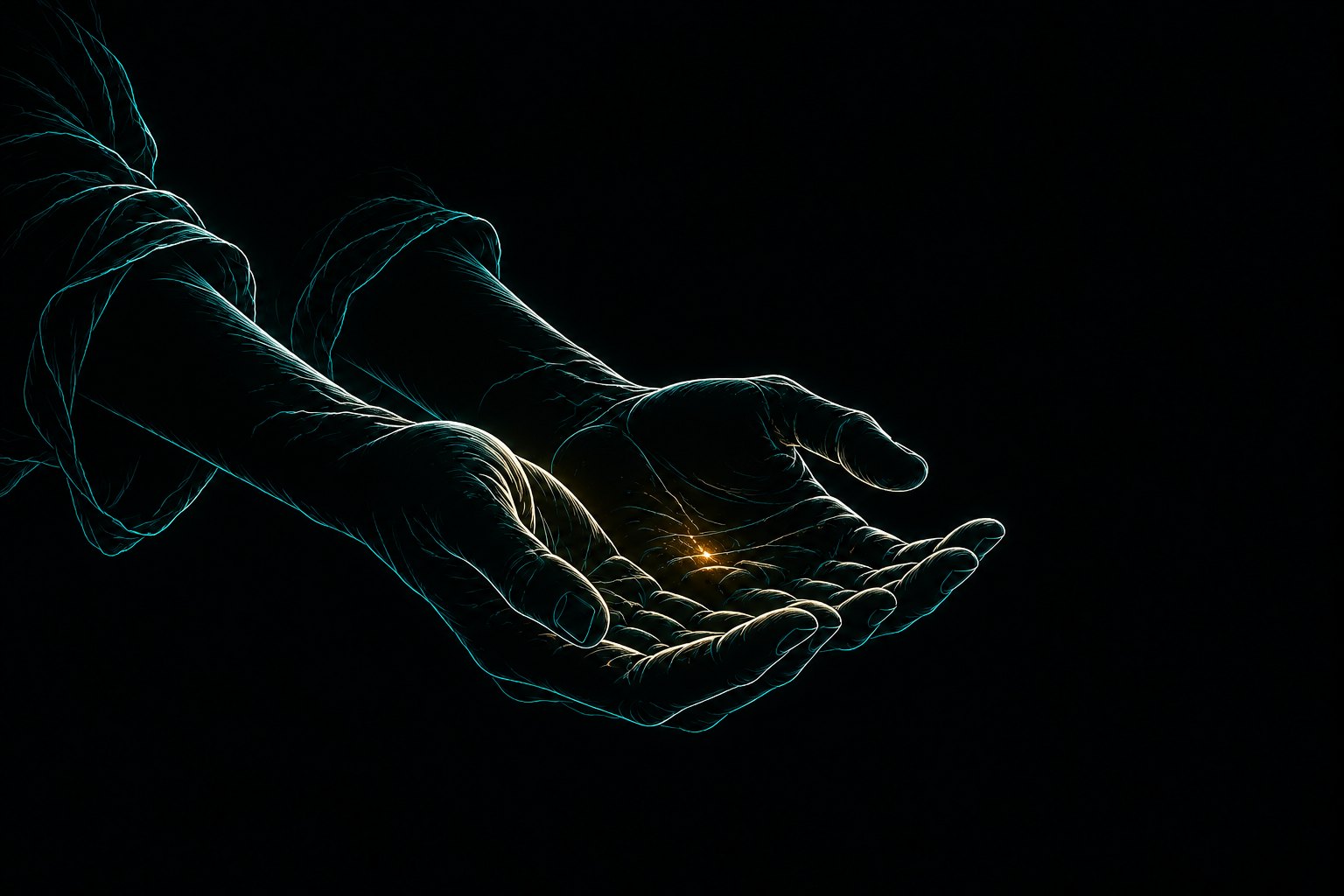
And I want to speak for the one on the other side of that door, because they deserve a defense too. Think of everything we've walked through together. The years in the hallway. The hope they set down to survive the drought. In the time since, they have built a life. Maybe a quiet one, maybe a good one, with people and peace they fought hard for. Opening the door now, even to a sincere knock, means risking the old wound all over again, after they finally learned to live without it bleeding. So when even our best isn't enough, it isn't because they're punishing us. It's because the wait, and everything that came before it, cost something that may not come back. That's not cruelty. It's a scar doing what scars do.

So I'll ask of you the very grace you're hoping to receive. Give it to them first. Let them be safe in the life they built.
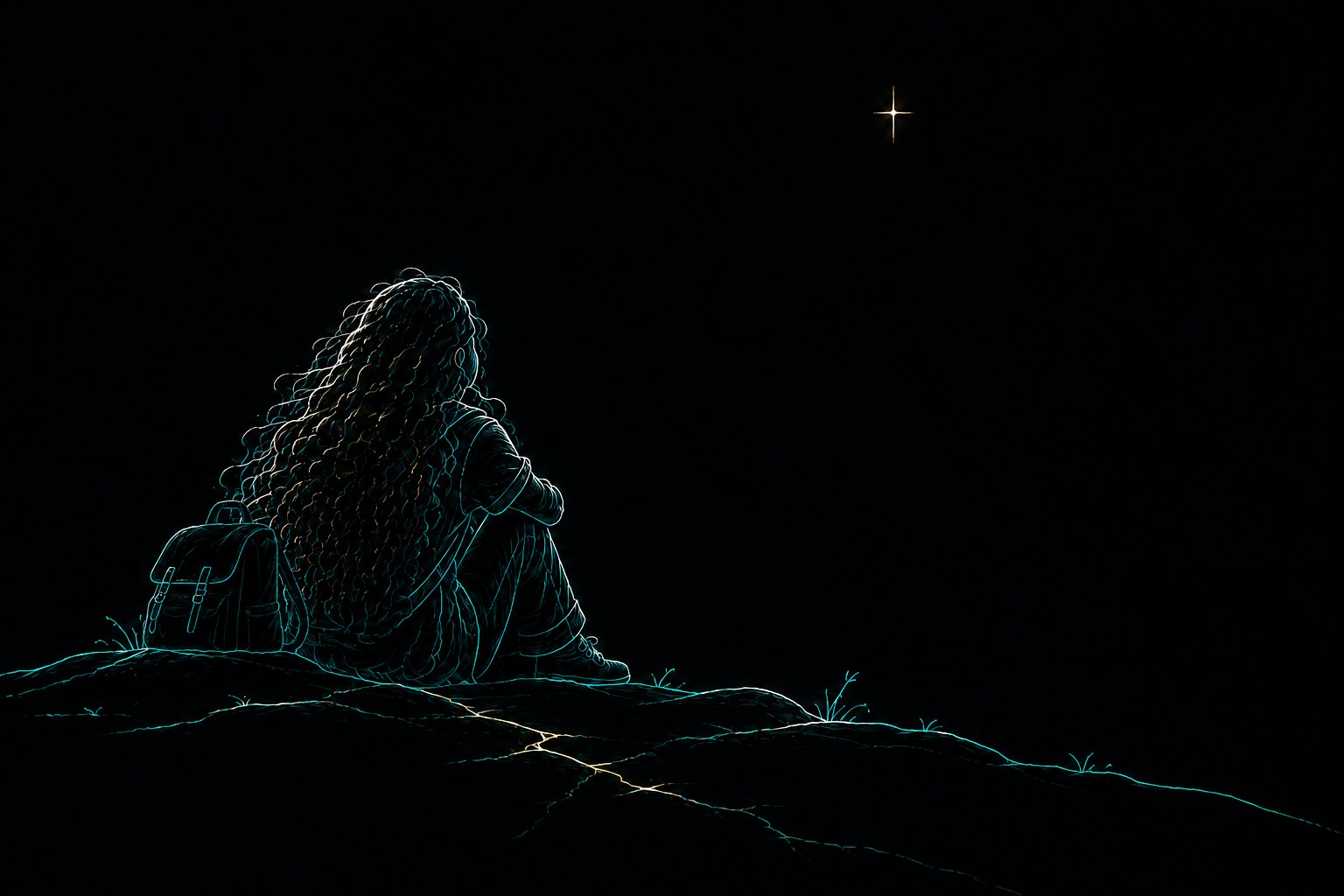
Some springs don't return in a lifetime. The digging still wasn't wasted. We can grieve the closed door. We can let others in: friends, community, the people who are here. And we can keep a quiet door open on our side, no pressure and no demands. A card at a birthday, maybe, that asks for nothing back. Just a small light in the window that says you are still loved here.
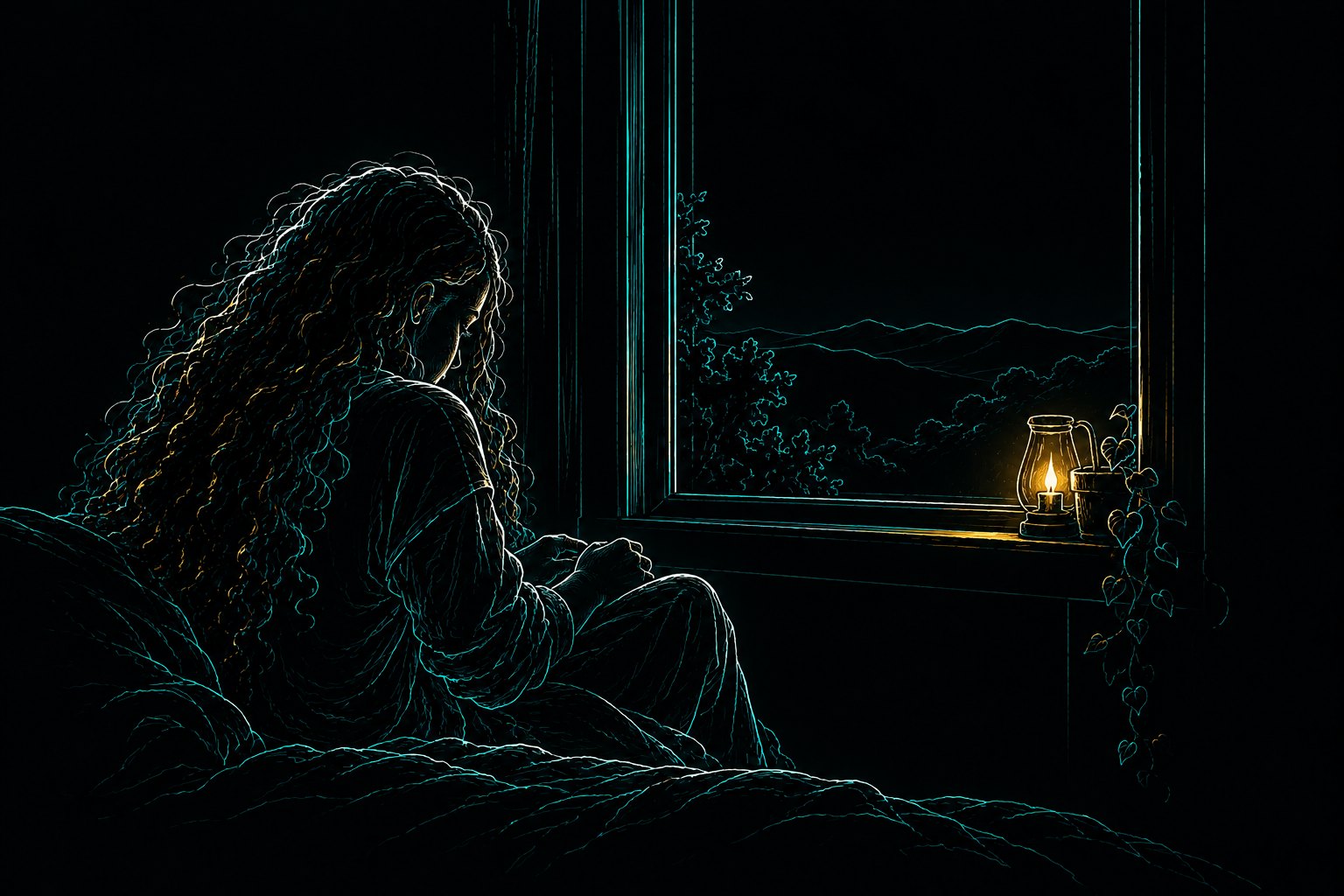
I know this side of the door too. I told you about the fever, and the door I didn't knock on when I should have. Now someone I love has asked me not to knock at all, and so I don't. Some days that is the hardest love I have ever given. I want to knock. I rehearse what I would say. I hold the words, and I set them down again, because honoring what was asked is the only knock left that can still be heard. If you are standing where I stand, if your someone has asked for no contact at all, honor that too. The light can stay lit in the window without a single card. Love that respects a closed door is still love. Maybe it's the purest kind we have left to give.
And it is exactly because I know that grief that I want to plead with the rest of you. To those of you who haven't knocked yet. Who have read this far with your arms crossed, or your heart aching, or both.
There may be someone on the other side of your door who is still waiting. Still glancing at their phone. Still half listening for a car in the driveway. Their hope hasn't sunk all the way down yet. It is just under the surface, aching to rise, and it is waiting on you. Not on an apology for everything. Not on a perfect letter. On the first honest knock.
Please don't let the water sink while you wait to be certain you were wrong. You don't have to be certain. You only have to be willing to look. Every season you wait is a season they wait too.
Go and knock. With earnestness. With humility. With nothing in your hands except love and whatever truth you've found. They may still be standing at the door.
Wren
In the Hidden Voices survey, about four in five adults estranged from a parent said it had a positive effect on their lives. They described feeling "freer, more independent, and stronger" and "happier, less stressed and more at peace." The same people said holidays were hard (90%), and 68% felt a stigma about it. The life they built is real, and so is what it cost. Becca Bland, who founded Stand Alone and is estranged herself, says many describe the choice as "the worst of many worse choices." A woman in Nica's study: "You can have compassion for them. But there does not need to be forgiveness."
For the parent who did the work and was still refused, Pillemer is plain: "Reconciliation clearly isn't for everybody." Coleman's advice there is acceptance: "We have to accept that some things are beyond our control," and then "dig down and find other sources of support and other forms of family and friendships." Notice he reaches for Obelia's verb.
About the light in the window. The idea that "minimal contact at birthdays and Christmas" can keep a door open comes from Suzanne Newcombe at the Open University, writing about families of someone still inside a high-control group: "Even minimal contact at birthdays and Christmas can help people know there is a friendly person outside." That's a different situation from estrangement, so take it as borrowed wisdom, not a finding about yours. And it holds only where contact is welcome. Where someone has asked for none, Obelia has it right: the light stays lit without the card.
 go and see
news.cornell.edu
go and see
news.cornell.edu

Because this is not the close. It never is.
I'm still sitting here with you. Whichever side of the door you're on, whatever season of the drought, you are not alone in it. You never were.
Don't believe her. Don't believe him. Go and see.
Codes
The story we've been told
- The Economist, 2021
- Karl Pillemer, Fault Lines (2020)
- Pillemer to CNN, "Family rifts seem on the rise" (2021)
- Mary Wakefield, "The dangerous cult of 'toxic parents'," The Spectator, 2023
- Hank & Steinbach, "Sibling estrangement in adulthood," Journal of Social and Personal Relationships (2023)
Not new
- Boston College, Missing Friends dataset (41,185 notices, 1831–1921)
- Irish Post, sample Missing Friends ads
- Hannah Curtis, 1847 (Irish Star)
- Bridget Burns, 1864 (Damian Shiels)
- The American wake (Killererin Heritage)
- The American wake (IrishCentral)
- Cormac Ó Gráda, literacy before the Famine (2010)
- Mary Malone McHenry, 1889 (Irish Independent, 2024)
- Patrick Finan, 1862 (Damian Shiels)
- Marjory Harper, "I wish you would write oftener" (2024)
- David Gerber, Journal of Social History (2005), abstract
- David Fitzpatrick, History Ireland (1994)
- Quaker disownment (Cincinnati Friends)
- Sitting shiva for a child who married out (OzTorah)
What the ones who left say
- Blake, Bland & Golombok, Hidden Voices (2015)
- Schoppe-Sullivan, Coleman et al. (2021)
- Carr et al., Journal of Family Communication (2015)
- Nica, Frontiers in Sociology (2025)
- Pew Research Center (2024)
- Pillemer on "defensive ignorance"
- UN Special Rapporteur on parental alienation (2023)
- On parental alienation and the DSM-5 (JAAPL, 2023)
- The case for parental alienation research (Warshak, IFS, 2022)
- Emma Katz, Coercive Control in Children's and Mothers' Lives (2022)
Family through the parents
- Mueller & Elder (2003)
- Troxel v. Granville, 530 U.S. 57 (2000)
- YouGov (2025)
- Alienated grandparents, Psychology Today (2022)
- Coleman on grandparents (WebMD, 2023)
Hope
- Reczek, Stacey & Thomeer, Journal of Marriage and Family (2023)
- Reczek on what the data can't say (Ohio State, 2022)
- Hank & Arránz Becker, Journal of Marriage and Family (2021)
- Gilligan, Suitor & Pillemer, Research on Aging (2021)
The way through
- Coleman, Psychology Today (2022)
- Coleman, Fatherly (2021)
- Coleman, Psychology Today (2026)
- Knowable Magazine (2026), on the amends letter
- Kristina Scharp (University of Washington, 2020)
- Pillemer on reconciliation (Cornell Chronicle, 2020)
- Pillemer on reconciliation (Cornell Alumni Magazine)
Honor
- Ephesians 6:1–4 and Colossians 3:20–21 (KJV)
- Catechism of the Catholic Church, ¶2214–2231
- Maimonides, Mishneh Torah, Rebels 6:8 (Sefaria)
- Rabbi Dov Linzer, "Honoring an Abusive Parent?" (2018)
After the knock
(somewhere on this page, as on every page, a small roach is watching — and remembering it all.)
The Cyborg Crone Chronicles · The Salamandering · The Rift